Durable Kids Clothes: Choose Pieces That Last
Your daughter outgrows her favourite jumper in three months. Your son's school trousers develop a hole after half a term. Parents spend roughly £400-600 a year replacing children's clothes, yet most items fail not from genuine wear but from poor construction or inadequate fit.
The solution is learning to identify durable kids clothing from the start. By selecting pieces with reinforced seams, quality fabrics, and room to grow, you can reduce annual clothing costs by up to 40% whilst ensuring your children look smart and feel comfortable. Here's how to choose children's clothes that actually last.
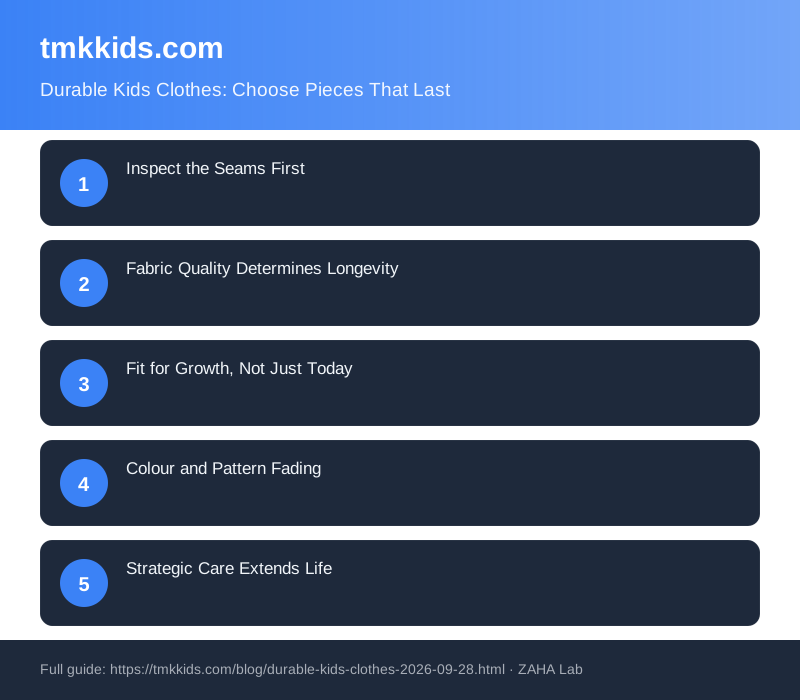
Inspect the Seams First
Durability begins where fabrics join. Before buying any item, examine the seams closely. Durable children's clothes feature double-stitched or reinforced seams, especially at stress points like underarms, shoulder joins, and trouser crotches. Run your finger along the seam: quality construction feels tight and even, with no loose threads or gaps.
Fast-fashion items often use single stitching that breaks down within weeks of regular wear. Premium brands and high-street retailers that specialise in school wear, like John Lewis and quality children's t-shirt sets, invest in proper seam construction because they understand that parents notice. Look for 2mm-3mm stitch depth and check that no loose threads exist before checkout.
Fabric Quality Determines Longevity
Not all cotton is equal. Cotton-polyester blends (typically 65% cotton, 35% polyester) outlast pure cotton by 2-3 seasons because polyester adds elasticity and resists pilling. For school uniforms, this blend is standard because it survives repeated washing and playground roughhousing.
Check the weight of the fabric. Heavier fabrics (200+ grams per square metre for t-shirts) resist thinning and tears far better than lightweight alternatives. Jersey knits should feel substantial when you hold them; they shouldn't be papery or translucent. Natural fibres like organic cotton are gentler on sensitive skin, but they wear faster than blends unless treated with durability finishes.
Avoid items made from 100% viscose or rayon for active children, as these fibres weaken when wet and tear easily during play. For everyday wear, kids' clothing that combines cotton with polyester or elastane provides the best balance of comfort, durability, and easy care.
Fit for Growth, Not Just Today
Buying clothes tight because they fit now guarantees they'll be outgrown in weeks. Smart parents buy children's clothes with growth room: approximately 2-3cm extra in sleeve length and 4-5cm in torso length. This allows 6-8 weeks of growth before pieces become too small.
Trousers should sit 2-3cm above the shoes, allowing for ankle growth. T-shirts should reach to mid-hip, not underarm. When sleeves are too long, they become baggy and catch on playground equipment; when they're tight to begin with, there's no room for growth. Brands like John Lewis and Next Children's range build this thinking into their sizing, which is why parents often choose them for school uniforms and everyday wear.
Check the hem design too. Adjustable waistbands and turn-up hems are your friends, as they let you extend trouser life by 2-4cm without replacing the whole item. Some children's school clothes sets include expandable features specifically for this reason.
Colour and Pattern Fading
Fading makes clothes look worn long before they physically are. Durable kids clothing retains colour through dozens of washes because manufacturers use high-quality dyes set at higher temperatures. Dark colours, especially navy and charcoal, fade less visibly than pastels or bright prints.
Look for items labelled with colour-fastness rating 4 or higher (on a scale of 1-5). Always wash new clothes in cold water the first time to prevent dye bleeding. Pre-treatment stain sprays (applied before washing) extend the life of patterned items by preventing permanent discolouration from everyday spills.
Strategic Care Extends Life
The way you wash and store children's clothes matters as much as the quality you buy. Turn items inside out before washing to reduce pilling and fading. Avoid fabric softeners, which break down elastic and create a waxy coating that traps odours. Instead, use white vinegar as a natural softener and odour remover.
Dry on lower heat or air-dry whenever possible. Tumble drying shrinks most fabrics and weakens fibres over time. Children's clothes dried on a line last 30-50% longer than those machine-dried regularly. Store out-of-season items in breathable cotton bags, not plastic, to prevent moisture damage and mildew.
Repair small issues immediately. A loose button or small hole, fixed within days, doesn't develop into a major problem. Keep a simple sewing kit handy, or take items to a local seamstress for £2-5 repairs that extend garment life by months.
Cost Per Wear Matters
The cheapest item isn't the best value. A £40 jumper worn 150 times over two years costs 27p per wear. A £12 jumper worn 40 times before it fails costs 30p per wear. Calculate cost per wear by dividing price by expected wears. Durable pieces, especially basics like t-shirts and trousers worn year-round, deliver better value despite higher upfront cost.
Invest most in basics (plain t-shirts, neutral trousers, school uniform components) that work across outfits and seasons. Use budget for trendy items your child will outgrow or tire of within months. Many parents buy multipack kids t-shirts in neutral colours as a durable, affordable base, then add one or two statement pieces each season.
Brands That Deliver Durability
Not all retailers prioritise durability equally. John Lewis Children's range, Next, and Boden consistently receive high marks from parents for seam quality and fabric longevity. Supermarket own-brands (Asda, Sainsbury's, Tesco) have improved significantly and offer good value for basics, though they rarely match premium brands for seam strength. Specialist school-wear brands focus entirely on durability, as schools demand uniform pieces last a full academic year.
FAQ
How often should I replace my child's school uniform?
Quality school uniforms with reinforced seams last 18-24 months of daily wear. Replace items when seams split, fabric pills excessively, or colours fade significantly. Trousers typically wear out before tops because they experience more friction.
What size should I buy if my child is between sizes?
Choose the larger size and plan to wear it through at least two seasons. Most children grow 5-8cm per year, so sizing up 1-2cm now is smarter than replacing clothes every few months. Adjustable waistbands help extend trouser life further.
Can I stop clothes from pilling?
Pilling happens with blended fabrics through friction. Wash inside out, avoid fabric softeners, and air-dry when possible. Lint rollers or fabric shavers remove existing pills without damaging seams. Quality fabrics pill less, which is why premium items stay looking newer longer.
Is organic cotton worth buying for durability?
Organic cotton is kinder to skin and the environment, but it wears faster than cotton-polyester blends. For everyday wear, choose blends. For sensitive skin, organic cotton is worth the trade-off if you're willing to replace items slightly sooner.
How many sets of school uniform should I buy?
Three to four complete sets allow rotation and washing without rush replacements. Rotating uniforms extends each piece's life because they dry fully between wears and experience less cumulative stress.