Back to School Clothes: The Essential List
Faced with a new school year, many parents feel lost in the clothing maze. The good news: a well-planned wardrobe of seven to ten basic pieces covers most school days, allowing your child to feel confident and comfortable without constant shopping trips.
Building the right back to school clothes collection saves money, reduces daily stress, and gives children a sense of routine. This guide covers the essentials every primary school child needs, from school uniform basics to layering pieces for unpredictable British weather.
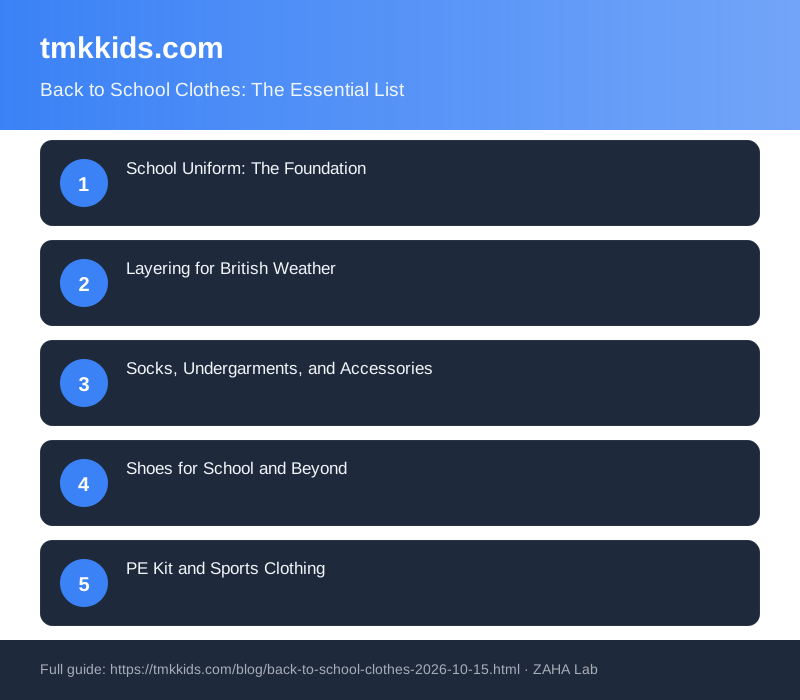
School Uniform: The Foundation
Most UK primary schools require a uniform, which forms the backbone of your child's school wardrobe. The typical uniform includes a white shirt or blouse, a jumper in the school colour, dark trousers or a skirt, and school shoes. Rather than buying one of each, aim for at least two of each core item so your child always has a clean uniform while one is being washed.
Invest in good-quality pieces that withstand frequent washing and playground wear. Cotton-blend school shirts resist wrinkles better than pure cotton and last longer through repeated wear. A reinforced jumper with quality seams holds up better to the rough-and-tumble of primary school life.
Layering for British Weather
British weather demands flexibility. Beyond the school jumper, add a plain cardigan or additional jumper in a neutral colour. This gives your child options on warmer days whilst keeping them warm during chilly mornings and autumnal weather.
A lightweight, packable jacket suitable for outdoor play also belongs in the rotation. Many children play outdoors in all weathers during lunch and playtime, so a waterproof or water-resistant layer protects both child and uniform from rain and mud.
Socks, Undergarments, and Accessories
Small items matter. School socks in the required colour, usually black or grey, need regular replacement, so buy a pack of six to eight pairs. Cotton-blend socks breathe better and wear longer than pure cotton. Similarly, stock up on plain white vests or t-shirts for layering underneath uniforms.
Hair accessories (clips, bands, ties) get lost regularly. Buy multipacks to ensure your child always has something on hand. If the school allows, plain school cardigans and jumpers can double as casual wear outside school hours, stretching your budget further.
Shoes for School and Beyond
School shoes must meet uniform requirements, but comfort matters equally. A child wearing uncomfortable shoes will struggle to focus in class or enjoy playtime. Black leather or leather-look shoes with good support are typical. Buy a slightly larger size to allow room for growth, since children's feet grow quickly.
Keep a pair of trainers or plimsolls at school if permitted for PE lessons. Even if the child wears them only once weekly, quality matters. Cheap shoes with poor arch support can cause discomfort and affect posture during exercise.
PE Kit and Sports Clothing
Most schools require a separate PE kit with shorts, a t-shirt, and sometimes a sweatshirt in the school colours. Check your school's specific requirements, then buy two of each item. This ensures a fresh kit is always available while the other is in the wash. Include a drawstring bag to keep PE clothes separate from the school uniform.
For children who participate in after-school sports clubs, add extra t-shirts and shorts in neutral colours. A lightweight tracksuit or joggers works for both PE and casual wear, making these pieces a practical investment.
Smart Casual for Special Days
Beyond uniform days, children occasionally need smart casual clothing for school events, trips, or non-uniform days. A pair of dark jeans or chinos, a plain t-shirt, and a simple jumper cover most occasions. These pieces also serve as weekend wear, maximizing value.
One smart dress or button-up shirt adds variety for special assemblies or events. Choose pieces in neutral colours that work with multiple outfits and fit within your child's existing wardrobe.
Building a Sustainable Approach
Rather than buying a large collection at the start of the year, purchase essentials first. Observe what your child actually wears and what needs replacing, then add items gradually. This prevents accumulating clothes your child outgrows quickly or simply doesn't wear.
Consider hand-me-downs from older siblings or friends. Many uniform items, particularly jumpers and cardigans, wear well and remain in style. Uniform swap groups on social media connect parents looking to rehome barely-worn clothing.
Practical Shopping Tips
Purchase uniform items during back-to-school sales, typically July through September, when stocks are highest and prices lowest. Department stores, supermarkets, and specialist school-wear shops all stock uniforms, so compare prices and quality before committing.
Always check uniform labels for washing instructions. Some blended fabrics require cooler temperatures or lower tumble-dry heat, which extends garment life significantly. Label clothing with a permanent marker or iron-on labels so lost items find their way home from the lost-and-found.
Keep a record of your child's shoe size and key measurements. Growth spurts happen quickly during primary school, and knowing these details allows fast online ordering when replacements are needed mid-year.
FAQ
How often should I wash school uniforms?
Wash uniforms after every two to three days of wear, or more frequently if visibly soiled. Regular washing removes sweat and dirt, extending garment life and preventing odours.
What's the best way to remove grass stains from uniforms?
Apply a stain remover to dried stains before washing, or soak in cool water with a biological washing powder. Avoid hot water, which can set stains permanently. For stubborn marks, repeat the process before tumble-drying.
Should I buy uniform clothes larger to account for growth?
Buy a size that fits now rather than oversized clothing that restricts movement. Instead, plan to replace items as your child grows. Oversized uniforms look untidy and can be uncomfortable during PE or outdoor play.
Can children wear plain clothes instead of uniform on non-uniform days?
Yes, but stick to the school's guidelines regarding appropriate clothing. Typically, jeans, plain t-shirts, jumpers, and comfortable shoes are acceptable. Avoid graphic tees, ripped clothing, or anything that might distract from learning.
How can I make uniform shopping more affordable?
Shop during back-to-school sales, compare prices across retailers, buy in bulk with other parents to negotiate discounts, and consider uniform swap groups or second-hand options online.
Affiliate Disclosure: This article contains affiliate links. When you purchase through these links, we may earn a small commission at no additional cost to you. This helps us provide free content to parents and carers.