Durable Kids School Clothes: Fabrics That Last
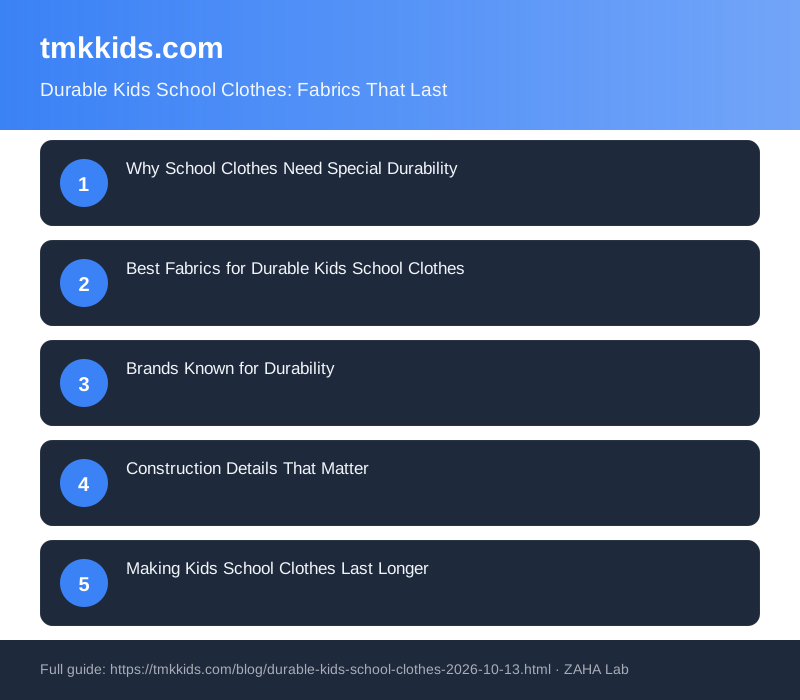
Most children wear through a favourite pair of school trousers in just six to eight weeks of term. The secret to clothes that actually survive primary school, sports days, and playground adventures lies in one place: the fabric. Cotton-elastane blends, reinforced seams, and durable weaves win every time. This guide reveals which materials hold up best and which brands parents trust year after year.
Why School Clothes Need Special Durability
School uniforms face unique stress. Kids climb, slide, sit on wet playground equipment, and throw themselves into games without thinking about their knees. Regular everyday fabrics simply cannot handle the combination of constant movement, repeated washing, and whatever sticky situations arise during lunch breaks. A shirt that would last months in casual wear gets holes within weeks in a school setting.
Durability is not a luxury, it is a financial necessity. Replacing uniforms two or three times a year adds up. A single durable pair of school trousers, bought once and worn for the entire year, saves money, reduces laundry day stress, and means fewer emergency uniform shopping trips when something tears.
Best Fabrics for Durable Kids School Clothes
Cotton-Elastane Blends (Cotton 98%, Elastane 2%)
This is the gold standard for kids school wear. Pure cotton breathes well and feels comfortable against skin, but adding just 2% elastane gives the fabric stretch and recovery. Elastane fibres bounce back after stress, preventing wear patterns and holes. Look for labels stating this exact blend, as it offers the longest lifespan of any common school fabric. The elastane content is low enough that the fabric still behaves like cotton, so it washes normally and does not feel synthetic.
Twill Weaves
Twill is woven in a way that creates diagonal ribs across the fabric. This structure is inherently stronger than plain weave cotton. School trousers made from twill withstand more friction and movement than similar-weight plain cotton. Twill also resists pilling (those tiny balls that form on fabric) better than other options. Most durable school trousers feature a twill weave rather than simple cotton jersey.
Polyester Blends (for Practical Items)
For non-uniform items like school bags, blazers, or PE kits, polyester blends offer excellent durability. Polyester fibres do not break down easily with friction or washing. A school jacket with 60% polyester and 40% cotton resists both wear and weather. However, pure polyester feels less comfortable against skin than cotton, so it works better for outer layers and structured items rather than shirts worn directly against the body.
Brands Known for Durability
Some brands invest heavily in durable school uniforms rather than chasing fashion trends. Marks and Spencer's school range uses reinforced seams and quality cotton blends throughout. Their trousers feature double-stitched hems and crotch points, the areas that wear fastest. Trutex, a school uniform specialist, manufactures with durability as the core focus, using heavier-weight fabrics and tested seam construction.
High street retailers sometimes offer surprisingly good value. Next's school range includes reinforced knees on some styles, and their cotton-blend shirts hold colour through many washes. John Lewis own-brand school clothes score highly on durability forums where parents compare notes year after year. Cheaper supermarket ranges often fail within weeks because the seams are not secure and the fabric is thin.
Construction Details That Matter
Fabric quality means nothing without proper construction. Check these details when buying school clothes.
- Double-stitched seams, especially at stress points like underarms, crotch, and sleeve attachment
- Reinforced hem stitching, not a single line
- Flat-felled seams in trousers, which fold seam allowances flat and stitch them down, creating a seam twice as strong
- Thick, quality zips that do not jam or break
- Cuffs and collars that are sewn securely, not glued
Making Kids School Clothes Last Longer
Washing Properly
Turn clothes inside out before washing. This protects the outer surface from friction against the washing machine drum. Wash in cool water, which is gentler on fibres than hot water. Use a gentle cycle for trousers and avoid over-stuffing the machine, as compression creates extra stress on seams.
Drying Smartly
Tumble dryers shorten fabric lifespan significantly. High heat breaks down elastane and stresses seams. Air dry whenever possible, or use the lowest heat setting if you must use a dryer. Hanging damp clothes to dry allows gravity to help smooth out wrinkles without added stress.
Repair Small Damage Early
A small seam opening becomes a major hole within days of wear. Stitch small loose seams before they expand. Replace zips before they jam completely. Reinforce knees and elbow areas with patches if you notice wear starting, especially for active children. A five-minute repair prevents buying replacement trousers weeks later.
Buy Multiple Sets
Rotating between multiple uniforms allows each to dry fully and reduces washing frequency. If your child wears one pair of trousers five days a week, 52 weeks a year, that fabric gets 260 washes. Two pairs shared equally halves the wash count, dramatically extending lifespan. Buying quality kids t-shirts in bulk at the start of term means you can wash less frequently and rotate through clean options.
FAQ
Do expensive school uniforms always last longer?
Not always. Price reflects brand reputation and retail markup as much as quality. A mid-range brand with proven durability (like Trutex or school-specific retailers) often outperforms expensive fashion brands that prioritise style over practicality. Read parent reviews before assuming price equals longevity.
What is the best fabric for school trousers specifically?
Cotton-elastane twill in a 98%/2% blend is ideal. This combines the breathability of cotton, the durability of twill weave, and the stretch and recovery of elastane, creating trousers that survive active play and washing without wearing thin or losing shape.
Can you fix torn school uniform seams at home?
Yes, for small tears or opening seams. Hand sewing with a needle and thread, or a basic sewing machine, can repair loose seams and small rips. For major damage or tears, professional alterations or replacement is more practical. Learning basic repairs saves money over the school year.
How often should school uniforms be washed?
Once or twice per week is ideal. Washing after every single wear breaks down fibres faster than necessary and uses more water and energy. However, waiting longer than a week allows sweat and dirt to set in, staining fabric and requiring hotter water to clean. Aim for every 2-3 days of wear.
Are supermarket school uniforms worth buying to save money?
Rarely. Supermarket uniforms cost less upfront but wear out much faster, forcing you to buy replacements multiple times per year. A higher-quality uniform bought once costs less overall and saves the time spent on emergency shopping trips. Calculate the cost over a full school year rather than per-item price.