How to Choose Durable Kids' T-Shirts
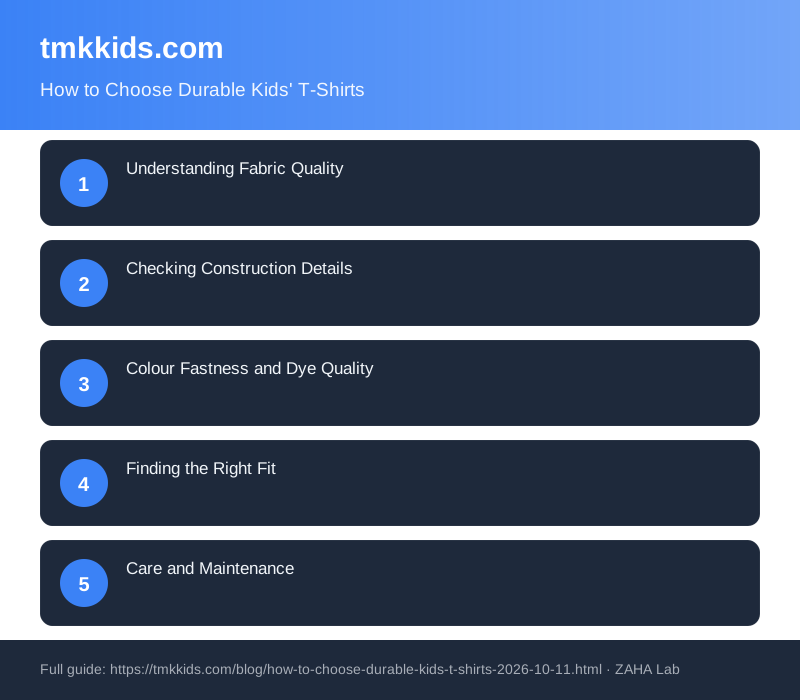
Children's clothes take a beating from playground adventures to messy mealtimes. The key to choosing kids' t-shirts that last through multiple seasons and siblings is understanding fabric quality, construction, and proper care. Here's how to invest in durable children's clothing that holds its shape and colour after countless washes.
Understanding Fabric Quality
Not all children's clothing is created equal. The fabric composition determines how well a t-shirt withstands daily wear and repeated washing. Cotton remains the gold standard for kids' wear due to its breathability, softness, and durability. Look for 100% cotton or cotton-rich blends (at least 80% cotton) rather than synthetic alternatives that pill and fade quickly.
When examining fabric quality, check the weight. Heavier fabrics (measured in GSM, or grams per square metre) generally indicate better durability. Children's t-shirts should ideally weigh between 180-200 GSM for optimal longevity. Lightweight fabrics under 150 GSM tend to thin out after several washes and become transparent.
Checking Construction Details
The way a t-shirt is made matters as much as the fabric itself. Quality stitching is your first line of defence against holes and unravelling seams. Examine the neckline, armholes, and side seams closely. Double-stitched seams are far superior to single-stitched ones, particularly in high-stress areas where children's clothing gets pulled and stretched during active play.
Feel the collar carefully. Reinforced necklines with tape binding or elastic backing maintain their shape through dozens of washes. Cheap t-shirts often develop stretched, saggy necklines within weeks. Children's clothing from established brands like Next and Marks & Spencer typically features superior collar construction that resists stretching.
Check the hem as well. Rolled or flat-felled hems last longer than simple single-fold hems. Run your finger along the bottom edge, checking that stitching is even and tight with no loose threads.
Colour Fastness and Dye Quality
Children's clothes that fade after a few washes waste money and look shabby. Quality dyes used in better-made children's clothing produce vibrant colours that resist fading even with frequent washing. Ask yourself: does the colour feel consistent throughout the fabric, or does it appear uneven? Do the dyes rub off on your hand when you run your fingers across the fabric?
For darker colours, slightly dusty or muted tones often indicate higher-quality dyes. Overly bright blacks or reds that feel plastic-like are often cheaper, lower-quality dyes that bleed during the first wash. Always wash new children's clothes separately from other items on the first wash to catch any excess dye.
Finding the Right Fit
Durability also depends on proper fit. Oversized t-shirts that drag on the ground get stepped on, developing holes and tears unnecessarily. Similarly, shirts that are too tight restrict movement and put strain on seams during active play. Aim for t-shirts with a little breathing room: two fingers' width between the fabric and your child's body.
Sleeve length should reach the shoulder joint without extending past it. Too-long sleeves get caught on things, whilst too-short sleeves look outgrown within months. Check that armholes sit comfortably, allowing full arm movement without sagging or pulling.
Care and Maintenance
Even the most durable kids' t-shirts need proper care to maintain their condition. Turning t-shirts inside out before washing protects colours and reduces pilling. Wash in cold water with mild detergent designed for children's clothing, and avoid bleach which weakens fibres. Air drying is ideal, though if you must use a tumble dryer, use a low heat setting.
Investing in a quality detergent formulated for preserving children's clothing extends the life of even premium pieces. Harsh detergents break down cotton fibres and fade colours unnecessarily. Remove stains promptly before washing, as set-in stains often require aggressive treatment that damages fabric.
Budget-Friendly Durability
You don't need to spend a fortune on children's clothing to get durability. Mid-range brands often offer better value than fast-fashion alternatives. Compare cost-per-wear by estimating how many seasons a shirt will last. A £15 t-shirt that lasts three years is better value than a £5 shirt lasting three months.
School uniforms deserve particular attention since children wear them daily. Quality school wear in cotton or cotton blends withstands the rigours of playground activities and frequent washing far better than budget options. Consider buying two or three identical t-shirts so each gets used less frequently, reducing wear on any single piece.
Sustainability Through Durability
Choosing durable children's clothing is an environmental choice as well as an economic one. T-shirts that last multiple children through hand-me-downs reduce overall consumption. Quality pieces develop character and patina that make them more loved, not less. Children often have sentimental attachments to favourite worn t-shirts, which naturally encourages longevity.
FAQ
What percentage of cotton should children's t-shirts contain?
Aim for at least 80% cotton or higher. 100% cotton is ideal for durability and comfort, though cotton-polyester blends (80/20 or 85/15) offer additional benefits like reduced wrinkles and maintained shape.
How often should you wash children's clothing?
Wash t-shirts after two or three wears unless visibly dirty or stained. Frequent washing is harder on fabrics than occasional wear, so rotating multiple shirts reduces strain on individual pieces. Always wash new children's clothing separately the first time.
Which brands make the most durable kids' t-shirts?
Marks & Spencer, Next, and Regatta offer excellent durability in the mid-price range. Fruit of the Loom basics are reliable and affordable, whilst premium options like Crew Clothing provide exceptional longevity.
Can you restore faded children's clothing colours?
Fading is generally permanent once it occurs. Prevent fading by washing inside out in cold water, using appropriate detergent, and avoiding excessive heat drying. Some specialist dyes can revive faded colours, though this works better with solid fabrics than printed designs.
Is organic cotton worth the extra cost for children's clothing?
Organic cotton t-shirts aren't necessarily more durable than conventional cotton, though they may feel softer and are gentler on sensitive skin. The durability difference comes from weight, construction, and dye quality rather than organic certification alone.
Related Products
Next Kids' T-Shirt Bundle
High-quality everyday t-shirts with reinforced seams and excellent colour fastness for active children.
View on Amazon UKMarks & Spencer School Wear
Durable school uniform t-shirts designed to withstand frequent washing and playground activities.
View on Amazon UKFruit of the Loom Kids' Multi-Pack
Affordable, durable basics in 100% cotton with reliable construction and fade-resistant colours.
View on Amazon UK