Kids' Clothing Fabrics: Which Materials Last Longest
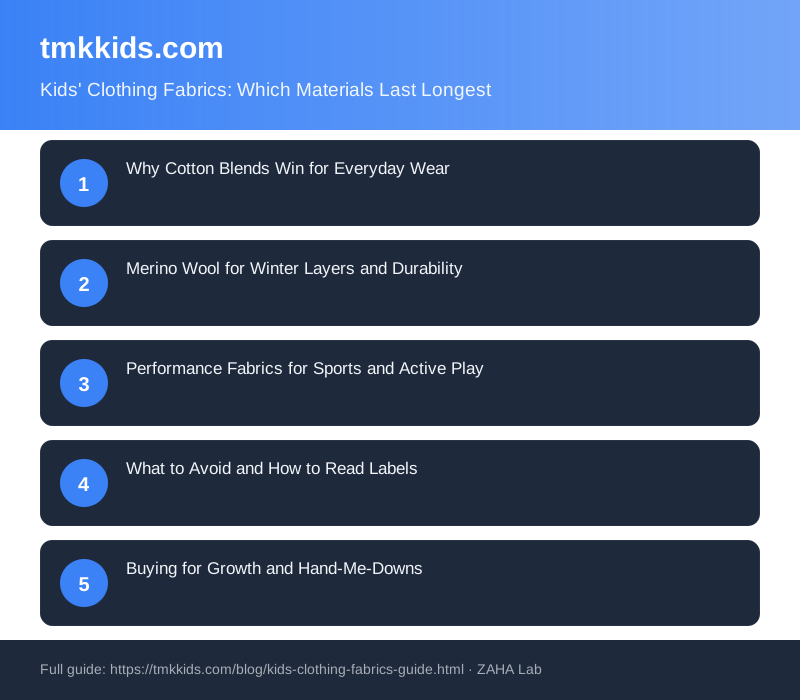
A child's t-shirt costs 5 pounds but survives three school years for one family and two years for another. The difference is rarely quality, but fabric composition. Cotton blends, merino wool, and performance synthetics each have different lifespans, shrinkage rates, and maintenance needs.
The best fabrics for kids' clothes are cotton blends (65-80% cotton), merino wool for durability, and performance synthetics for active wear. Cotton alone shrinks and fades; polyester alone pills and overheats. Understanding what's inside the label means buying once and passing clothes down with confidence, not watching them deteriorate after a handful of washes.
Why Cotton Blends Win for Everyday Wear
Pure cotton is breathable and soft but shrinks in the wash and fades faster than blends. Adding 20-35% polyester solves both problems. Polyester fibres are thinner and stronger than cotton; they don't absorb water the way pure cotton does, so garments hold their shape and colour longer. Look for 65-80% cotton blends on school uniforms and casual wear: they wash well, resist shrinking, and cost less than pure cotton while lasting twice as long.
Jersey cotton (the fabric used for t-shirts) in a 75/25 cotton-polyester blend offers the best balance for kids. It's soft enough for sensitive skin, breathable enough for active play, and durable enough to survive playground wear and frequent washing. Avoid 100% cotton jersey if longevity matters.
Merino Wool for Winter Layers and Durability
Merino wool is expensive but worth it for winter layers and jumpers that see regular use. It regulates temperature better than synthetics, resists odour naturally (so fewer washes needed), and lasts three times longer than cotton in high-wear areas like cuffs and collars. A 100% merino jumper worn twice a week will outlive three cotton alternatives worn the same schedule.
Merino pilling is normal and doesn't mean the fabric is failing. A gentle fabric comb removes pills in seconds. Merino is ideal for children's thermal base layers and school jumpers if your budget allows.
Performance Fabrics for Sports and Active Play
Polyester and nylon blends designed for active wear (often labelled "moisture-wicking" or "quick-dry") are built for rough play and frequent washing. These fabrics don't absorb sweat the way cotton does, so they dry faster and resist odour longer. A PE kit made from performance fabric lasts longer than cotton because it doesn't degrade from repeated sweat exposure and drying.
The trade-off is breathability. Performance fabrics can feel plastic-like against skin. Use them for sports wear, outdoor play clothes, and uniforms, but pair with cotton for all-day comfort. School PE kits in polyester-blend fabrics are designed to last a full year of twice-weekly PE lessons without fading or losing shape.
What to Avoid and How to Read Labels
Avoid 100% polyester for everyday clothing unless it's specifically designed as a performance fabric. Cheap polyester pills after five washes and doesn't breathe. Viscose and rayon blends are soft but weak; they stretch out of shape after a few wears. Look for fabric labels that show cotton content first and polyester second, in a ratio of 60/40 or better.
A fabric's care label tells you how it will age. Warm wash means the fabric may shrink; cold wash means it's stable. Tumble-dry low or flat-dry only means the fabric is delicate. Follow these instructions and fabrics last longer.
Buying for Growth and Hand-Me-Downs
Cotton blends hold their shape better than pure cotton, which matters when buying a size up for growth. A 75/25 blend will fit the same at size 6-7-8; pure cotton shrinks, so "one size up" becomes "fits now" after the first wash. Cotton blends are better for hand-me-downs because colours don't fade as much and elastic in waistbands remains elastic for longer.
Invest in merino and quality cotton-blend school uniforms if hand-me-downs are part of your plan. These fabrics fade evenly and don't weaken with age. Cheap polyester looks threadbare by the second wearer.
Related Products
Cotton-Blend School Uniform Basics
Durability starts with the right base. Quality cotton-blend polos, shirts, and jumpers resist fading and shrinking through multiple school years and hand-me-downs.
View on Amazon UKMerino Wool Thermal Layers
For winter wear and layering, merino outperforms cotton by miles. Warmer, longer-lasting, and requires fewer washes.
View on Amazon UKPerformance PE Kit Fabrics
Designed to survive playground intensity and twice-weekly PE lessons. Moisture-wicking polyester blends dry fast and resist odour.
View on Amazon UKFAQ
Why does pure cotton clothing shrink so much?
Cotton fibres absorb water, causing them to swell in the wash and shrink when heat-dried. Adding polyester reduces water absorption, stabilising the garment. A 75/25 cotton-polyester blend shrinks half as much as 100% cotton.
Is merino wool too expensive for kids' clothes?
Merino costs more upfront but lasts three times longer than cotton, so the cost per wear is lower. A 50-pound merino jumper worn twice weekly for three years costs less per wear than a 15-pound cotton jumper replaced every year.
What does "performance fabric" mean, and is it safe for kids?
Performance fabrics are synthetic blends designed for moisture-wicking and quick-drying. They're safe for kids and ideal for sports wear and active play. Use them for PE kits and outdoor clothes, not for all-day comfort wear.
How do I stop clothes from pilling?
Pilling happens when fibres weaken and break, forming balls on the surface. Wash inside-out, use cold water, avoid fabric softener (it weakens fibres), and dry flat instead of tumble-drying. A fabric comb removes pills gently without damaging the garment.
Can I buy a size up if it's cotton blend to allow for growth?
Yes, cotton blends shrink much less than pure cotton. Buy one size up in 75/25 blends and expect minimal shrinkage. For pure cotton, size up one and a half because shrinkage is unpredictable. Always check the care label.