Kids Everyday Wardrobe: Essential Pieces to Buy
Most parents buy kids' clothes in reactive bursts, leaving drawers full of pieces that don't work together. Build a planned everyday wardrobe with core basics in one colour palette, and you'll cut morning stress, reduce laundry pressure, and stop wasting money on clothes your child never wears.
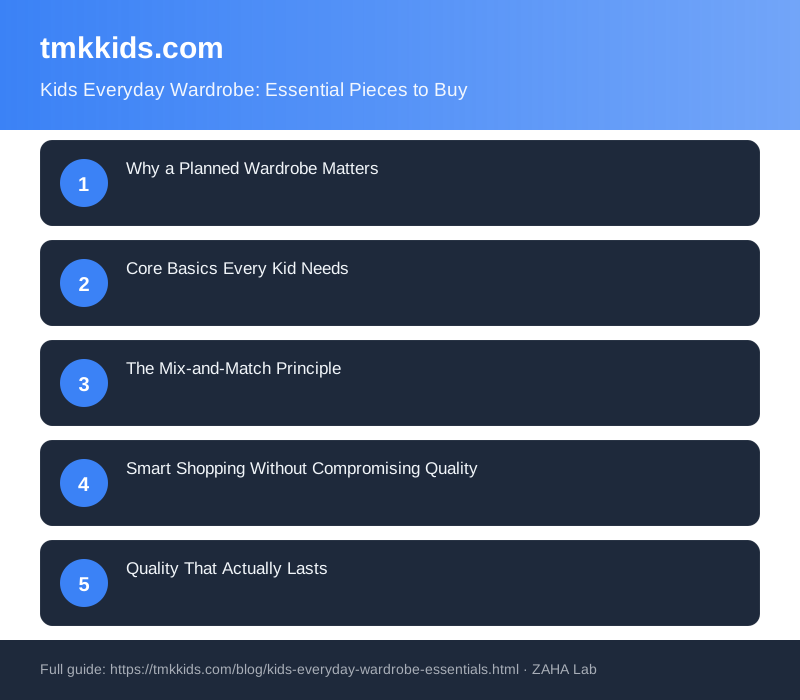
Why a Planned Wardrobe Matters
Kids outgrow clothes fast. Growing from age 4 to 12 means replacing most items at least twice. Without a system, you end up buying scattered: new trousers when the old pair rips, new jumpers when weather changes. A structured approach means you buy once, build layers, and mix pieces across seasons.
Versatile basics mean your child can dress themselves quickly, handle changing weather without a full wardrobe refresh, and wear fewer special items, which reduces washing cycles on delicate pieces.
Core Basics Every Kid Needs
Start with these five categories. Build everything else around them.
T-shirts and Long Sleeves
Five to seven basic t-shirts in neutral colours: white, black, grey, navy. Choose soft cotton or cotton-blend kids t-shirts that survive at least 50 washes without fading or shrinking. Add two to three long-sleeved tops for layering or cool weather wear.
Trousers and Jeans
Two pairs of everyday jeans or chinos, one pair of joggers. Kids' jeans need reinforced seams around the knees, where active children wear through fabric fastest. Dark indigo lasts longer and hides marks better than lighter shades.
Jumpers and Hoodies
Two to three everyday jumpers in neutral tones. Quality kids' jumpers in grey, navy, or cream layer over anything else and extend every other piece's usefulness through seasons.
Layers and Fleece
One lightweight vest, one zip-up fleece. These let you adjust for temperature swings without buying season-specific replacements.
The Mix-and-Match Principle
Every top must work with every bottom. Stick to one colour palette. If you have navy, grey, white, and black basics, every piece combines with everything else. Add one patterned top if you like, but keep colours within your palette.
Skip bright branded graphics or trendy prints that look dated within months. Simple bases mean your child can dress themselves and spots outfit combinations they like.
Smart Shopping Without Compromising Quality
Basics don't cost much. High-street own-brands from Tesco, Asda, and Marks & Spencer offer solid everyday wear at 5 to 15 pounds per item. Mid-range brands like Next cost 12 to 20 pounds but last longer through washes and siblings. Skip super-cheap single-wear items and luxury brands that add no value to everyday pieces.
Buy multi-packs of t-shirts rather than single items. A pack of five basics costs less per item than buying one at a time.
Quality That Actually Lasts
Check three details before buying. Seams are double-stitched and flat, not frayed. Fabric weight is substantial but not stiff. Labels guarantee survival through at least 40 wash cycles. Natural cotton breathes well, and cotton-blends hold shape longer than 100 per cent cotton. Test one item before buying multiples from a new brand.
FAQ
How many t-shirts does a child actually need?
Five to seven basics in rotation, plus one or two patterned tops if you like variety. This lets you wash every five days without running out.
Should I buy ahead for growth?
Size up no more than half a size ahead. Clothes that are too loose slide off and feel uncomfortable. Hem existing pieces instead of replacing too-big items every few months.
What colours are most practical?
Navy, grey, white, black, and khaki. These hide stains better than pastels and match across seasons.
How often should everyday clothes be replaced?
Every six to nine months for active children. Quality basics last through two to three children if cared for properly.
Are expensive brands worth it?
Not usually for everyday wear. Mid-range high-street brands offer better value. Save splurges for items your child wears constantly.