Disclosure: we earn a commission if you buy through the links on this page, at no extra cost to you.
Kids' Jumper Sizing: Fit & Durability
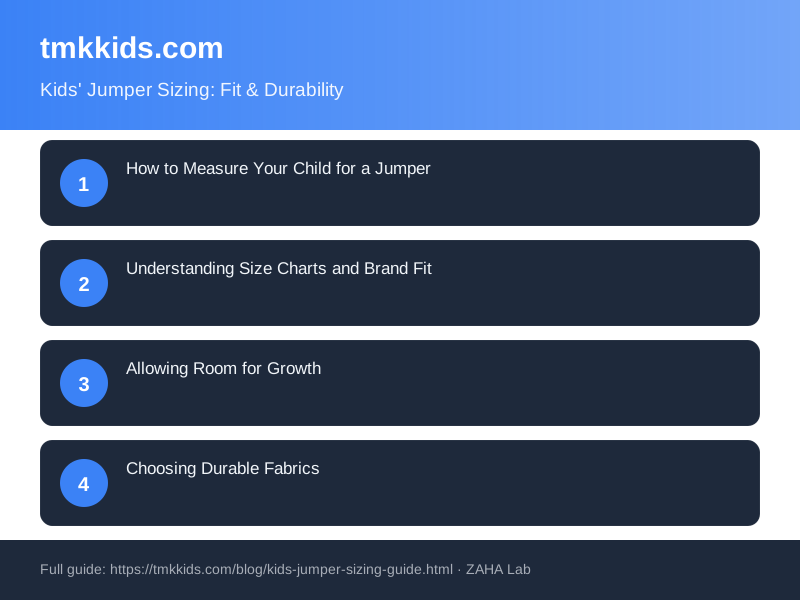
Most parents buy their child's jumper one size too large, thinking they'll grow into it. The result is a baggy, uncomfortable fit that makes kids feel self-conscious at school. Getting jumper sizing right means measuring your child properly, understanding how different brands fit, and choosing fabrics that survive repeated washing.
How to Measure Your Child for a Jumper
Start with the chest measurement. Have your child stand relaxed (not flexed) and measure horizontally around the fullest part of their chest, keeping the tape measure parallel to the floor. Don't pull the tape tight; leave room for a single finger to slip under. This measurement is your starting point for most jumpers.
Next, measure sleeve length from the center back of the neck down the arm to the wrist bone. With your child's arm relaxed at their side, start at the midpoint between the shoulder blades and run the tape down to where their wrist naturally sits. This ensures sleeves won't be too short after a few months of growth.
Finally, measure the length from the back of the neck down to the hips. Most children's jumpers should hit at or just below the hip bone. A jumper that's too long restricts movement and looks awkward tucked in.
Understanding Size Charts and Brand Fit
UK children's clothing uses age-based sizing (4-5 years, 5-6 years, etc.) and height ranges. However, size consistency varies wildly between brands. A "5-6 years" jumper from one retailer may be noticeably smaller than the same age from another. Always check the specific size chart before buying.
Look for brands that list chest circumference in centimeters alongside age. George (Asda) and Fruit of the Loom tend toward generous sizing, while designer brands often run slim. Check customer reviews for honest fit feedback before committing to a purchase.
Allowing Room for Growth
Children grow an average of 5 to 7cm per year. A jumper should never be so oversized that it looks ridiculous, but it shouldn't be skin-tight either. Aim for a gap of 2-3cm when you pinch the fabric at the side seam. This allows room for growth without looking baggy on day one.
For the sleeves, aim for roughly 1-2cm of wrist bone visibility when the arms are relaxed. Sleeves that cover the hand restrict finger movement and get damaged by constant friction. Consider rolling cuffs once or twice if a jumper is slightly longer than ideal.
Choosing Durable Fabrics
100% cotton jumpers are breathable and soft but shrink in the wash. Cotton blends (85% cotton, 15% polyester) offer better durability and shape retention. For school wear, acrylic or acrylic blends resist pilling and hold colour well, though they feel less luxurious against skin. Look for fabric weight of at least 280 GSM (grams per square meter) for school jumpers.
Check seams before buying. School jumpers take punishment, so stitching should be reinforced at stress points like shoulder seams and armholes. Quality jumpers typically cost £12 to £25. Budget options under £8 rarely survive a full year of daily wear.
FAQ
Should I buy a jumper one size up for growth?
Buying more than one size up creates a poor fit that affects comfort and appearance. Instead, choose the current size with 2-3cm of room at the side seams. You'll replace jumpers annually due to either growth or wear anyway.
How often do children need new jumpers?
Most children need 1-2 new jumpers per school year, depending on growth rate and wear. Fast-growing children may need replacements mid-year. Keeping a backup jumper at school helps if one is damaged during play.
What's the best way to prevent jumper pilling?
Turn jumpers inside out before washing, use a cold cycle, and dry flat or hang-dry rather than tumble drying. A pilling comb (around £3-5) removes loose fibres before they become visible balls of fluff.
Can I shrink a jumper to fix poor fit?
You can intentionally shrink cotton blends using a hot wash and dryer, but results are unpredictable and the garment may lose shape. It's safer to exchange for a different size or resell and buy the correct fit.
Do boys' and girls' jumpers fit differently?
Yes. Boys' jumpers typically have wider chests and shorter lengths, whilst girls' jumpers are narrower through the chest and longer in the body. Always check the size chart rather than assuming unisex sizing.
Related Products
Kids' Plain Jumpers
Essential cotton-rich jumpers in navy, grey, and black. Reinforced seams for durability through the school year.
View on Amazon UKPullover School Jumpers
Crew neck and V-neck options in quality acrylic blend. Available in 2-3 packs for practical value.
View on Amazon UKKids' Clothing Size Guide
Comprehensive sizing reference covering jumpers, trousers, and school wear across major UK retailers.
Read the Guide