Kids' Shoe Sizing: Get the Perfect Fit Guide
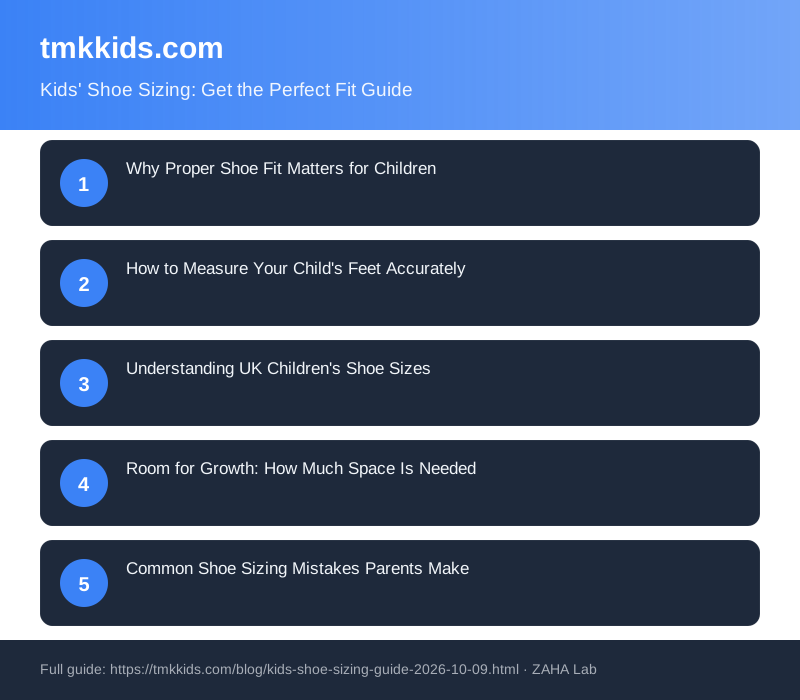
Most children outgrow their shoes within 8-10 weeks, yet parents often buy shoes that don't fit properly. Getting the right shoe size is essential for foot development and safety. This guide shows you exactly how to measure, understand UK sizing, and avoid the mistakes that lead to discomfort and blisters.
Why Proper Shoe Fit Matters for Children
Badly fitting shoes don't just feel uncomfortable. They affect how your child walks and runs during their most important growing years. Shoes that squeeze cause blisters, ingrown toenails, and discourage physical activity. Shoes that are too loose lead to tripping, poor balance, and heel injuries. The right fit supports natural foot development and builds confidence.
Children's feet are still soft. Their bones haven't fully hardened, and the arch is still forming. Pressure from tight shoes can actually change foot shape permanently. Excessive movement inside loose shoes creates friction that damages skin. A proper fit means your child moves freely, runs without pain, and develops strong, healthy feet.
How to Measure Your Child's Feet Accurately
The most reliable method is measuring at home. You'll need a ruler, a measuring tape, and a sheet of paper.
- Have your child stand barefoot on A4 paper with their heel against a wall
- Mark where the longest toe ends (usually the big toe, sometimes the second toe)
- Measure the distance in centimetres from heel to toe mark
- Repeat with the other foot and use the larger measurement
- Measure again in the afternoon or evening, as feet swell throughout the day
Always measure both feet. Many children have one foot slightly larger than the other. Buy shoes that fit the bigger foot comfortably. Ignore the other foot. One uncomfortable foot ruins the whole shoe experience.
Understanding UK Children's Shoe Sizes
UK child sizes run from 0 to 13.5. Each whole size represents about 0.83 centimetres of length. A child wearing UK size 5 (around 20.5cm) might be 3-4 years old. UK size 8 (around 23cm) fits most 5-6 year olds. UK size 11 (around 25.5cm) suits 8-9 year olds. These are only rough guides because children grow at completely different rates.
The only reliable approach is measuring. Shop fitting services offer a free alternative, and trained staff can account for width as well as length. Shoe fitting tools for home use provide another option, though professional fittings remain more accurate.
Room for Growth: How Much Space Is Needed
This is where parents most often go wrong. Children's shoes need growth room, but the amount is precise. Aim for 1.3 to 1.6 centimetres of space between the longest toe and the shoe's end. You should be able to fit one finger (not a whole hand) into the heel when the shoe is worn.
This seems counterintuitive, but oversized shoes are worse than tight ones. Your child will catch their heels on loose shoes, creating blisters. They'll develop a shuffling walk trying to keep the shoe on their foot. They might twist their ankle whilst running. The 1.3-1.6cm gap balances real comfort with genuine growth room.
Children typically wear out their shoes before they truly outgrow them. During primary school years, most kids need new shoes every 8-12 weeks. Measure feet quarterly so you catch outgrowth before shoes become painful. A quick check every few months prevents weeks of your child suffering in silence.
Common Shoe Sizing Mistakes Parents Make
Buying by age: A 5-year-old could genuinely need any size from 7 to 10. Age tells you nothing about foot size.
Assuming last year's size: Your child wore a UK 8 last September, but they might need a 10 this year. Children grow unpredictably.
Shopping early in the day: Feet swell naturally as the day progresses. A shoe that fits perfectly at 9am feels tight by 6pm. Shop in the afternoon or evening.
Ignoring width: Shoe width matters as much as length. A child with narrow feet crammed into standard-width shoes will have heel slippage and constant friction. Check whether your child's feet are narrow, standard, or wide. Brands like Clarks offer detailed fitting guides for different widths.
Buying second-hand without testing: Used shoes have moulded to another child's foot shape. This causes discomfort and blisters even if the size is technically correct.
School Shoes Versus Sports Shoes
School shoes and trainers need different fitting approaches. School shoes often run narrower than sports shoes, so your child's size might differ. A child who needs UK 8 in a leather shoe might need UK 8.5 in a running trainer. Always fit each shoe type individually rather than assuming one size works everywhere.
Sports shoes with socks need slightly less growth room (around 1.3cm) because feet stay still during fitting. School shoes, worn for longer periods with movement and activity, benefit from the full 1.6cm allowance to prevent rubbing.
When to Replace Children's Shoes
Replace shoes when your child complains of tightness, when you can't fit a finger in the heel, or when the shoe visibly overlaps the foot. Don't wait for shoes to feel loose. That indicates your child has been uncomfortable for weeks.
Check shoe fit monthly for toddlers and every 6-8 weeks for school-age children. A weekly heel-check takes 30 seconds and catches outgrowth early, before your child develops blisters or gait problems.
Recommended Children's Shoe Brands
Clarks, Start-Rite, and Scholl are trusted names for reliable sizing and good support. These brands' shoes usually fit true to UK size with consistent width options across styles. Many high street shops stock multiple brands so you can compare fit on your child's actual feet rather than guessing.
FAQ
What if my child is between two UK sizes?
Always go up to the larger size. A slightly roomy shoe with proper growth room beats a shoe your child will outgrow in weeks. Ensure you can fit one finger in the heel.
Can children safely wear shoes a full size too big?
No. More than 1.6cm of toe space causes tripping, heel slipping, and blisters. Shoes that are too big create safety risks and bad walking habits that take weeks to correct.
How do I spot that shoes are too narrow?
Watch how your child walks. If they favour the outside edges of their feet or complain of tightness across the widest part (not just at the toe), the shoe is too narrow. Heel slippage also suggests a poor width fit.
Should I buy shoes a size larger to make them last longer?
No. Oversized shoes cause injury, discomfort, and poor gait development. Buy the correct size now, measure in 8 weeks, and buy again. Quality shoes cost less than treating injuries from poor fitting.
Do all brands fit the same in the same UK size?
No. UK size 8 from one brand may feel different from UK size 8 from another, especially for width. Always fit your child in the actual shoe before buying, even if that size worked with a different brand previously.
Related Products
Clarks Children's Shoes
A trusted brand offering reliable sizing, supportive designs, and good durability. Clarks provide school shoes and everyday trainers with consistent fit across styles and width options.
View on Amazon UKStart-Rite School Shoe Range
Specialising in children's shoe fitting with expert guidance on sizing and width support. Start-Rite is known for precise measurements and designs that support growing feet through school years.
View on Amazon UKCushioned Children's Training Socks
Proper socks affect fit significantly. Cushioned training socks provide the right thickness so your measurements account for what children actually wear in their shoes daily.
View on Amazon UK