Kids' Shoes: Sizing Through Growth Spurts
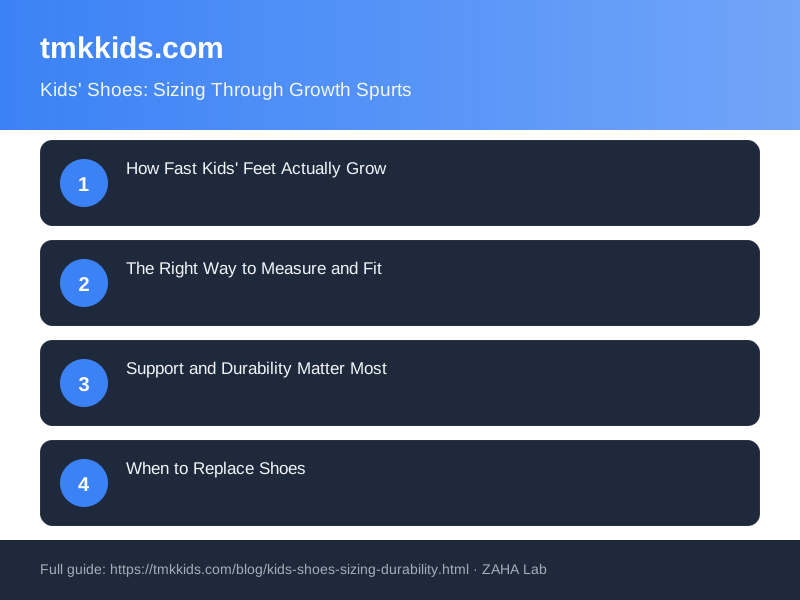
Most parents buy children's shoes one or two sizes too large, hoping to extend wear time. This backfires quickly. Shoes that don't fit properly cause friction blisters, poor gait development, and foot pain. Kids stop wanting to run and play because their feet hurt.
The answer: buy shoes that fit now, with roughly half a thumb's width of growing room at the toe. Replace during growth spurts every 6 to 8 weeks. Focus on arch support and a snug heel to prevent twisting injuries. This approach costs more in replacements but saves on pain, podiatry visits, and lost playtime.
How Fast Kids' Feet Actually Grow
Children's feet grow at different rates depending on age. Between ages 2 and 4, feet grow roughly half a size every 2 to 3 months. The pace slows slightly for ages 4 to 7 (half a size every 2 to 4 months), then accelerates again during pre-teen years (ages 8 to 12) when growth spurts cluster between autumn and spring.
On average, kids' feet increase by about 1.5 shoe sizes per year until age 12. During peak growth periods, this can jump to 2 sizes in a few months. Measuring feet monthly during rapid growth seasons helps catch outgrowing before shoes become dangerous.
The Right Way to Measure and Fit
Measure your child's feet in the afternoon when they are naturally slightly swollen from the day's activity. This prevents buying shoes that fit in the morning but pinch by evening. Measure both feet; most children have one foot slightly larger than the other. Always fit to the larger foot.
The thumb's width rule works: press your thumb against the shoe's toe cap while your child wears the shoe. You should fit your thumb flat between the end of the longest toe and the shoe end. This provides room for growth (roughly quarter to half an inch) without excess space that causes tripping or blister-forming rubbing.
Clarks school shoes with adjustable velcro straps make this testing easier since you can loosen or tighten them as feet swell or grow. Velcro and buckle closures outperform laces for young children, which tend to come undone and create tripping hazards.
Support and Durability Matter Most
Children's feet are still developing. Flat feet or high arches at age 4 often correct themselves by age 7 as ligaments strengthen. However, shoes with rigid heel counters and proper arch support prevent foot fatigue during active play. Soft, unsupported canvas shoes work for short periods indoors, but outdoor and school wear needs structure.
Leather and synthetic reinforced materials outlast thin fabrics. The heel should hug the foot firmly without pinching the Achilles tendon. Nike children's running trainers feature shock-absorbing midsoles that protect growing bones from impact injuries. School shoes in leather or hardwearing synthetics with ankle support typically last one growth cycle if worn 5 days per week.
When to Replace Shoes
Replace shoes when the longest toe reaches 6 millimetres from the shoe end, or when your child complains that shoes feel tight. Watch for heel slippage (the foot sliding forward in the shoe during walking), which causes blisters and alters gait. If your child walks on the inside or outside of the shoe edge, the shoe no longer provides proper support.
Worn-out cushioning in the heel and ball of the foot increases injury risk. Press your thumb into the insole; if it doesn't spring back, support is gone. Some shoes become too narrow before they become too short, particularly if your child has naturally wide feet. Width matters as much as length.
FAQ
How often should I measure my child's feet?
Measure feet monthly during ages 2 to 7 and every two months during ages 8 to 12. More frequent checks during known growth-spurt seasons (autumn, spring) catch rapid growth before shoes become painful.
Can hand-me-down shoes work for the next child?
Only if worn shoes still have cushioning, the heel counter is unbroken, and the foot shape matches your next child's (some inherit wide feet, others narrow). Shoes moulded to one child's gait can cause problems for another. When in doubt, buy new.
Why shouldn't I buy shoes online without trying them?
Shoe sizing varies dramatically between brands, materials, and widths. What fits in one brand at a given size may pinch or slide in another. Trying both feet in both shoes and walking around ensures proper fit before purchase.
What shoes work best for school and everyday play?
Start-Rite children's school shoes with reinforced toe caps combine durability, support, and ease of fastening. For outdoor play, trainers with shock-absorbing soles and ankle support prevent injury on rough surfaces and during rapid direction changes.
Should I worry about flat feet or high arches in young children?
Most children appear flat-footed until age 7 as their arch gradually develops. Shoes with mild arch support help this process without forcing correction. Consult a podiatrist only if your child experiences pain or walks significantly on the foot's outer edge.
Related Products
Reinforced leather uppers with adjustable closures, available in sizes 10 to 6 youth. View on Amazon UK
Shock-absorbing midsoles and secure ankle support for running and outdoor play. View on Amazon UK
Durable children's school footwear with reinforced toe protection and correct arch support. View on Amazon UK