Kids School Polo Shirts: Which Ones Last All Year?
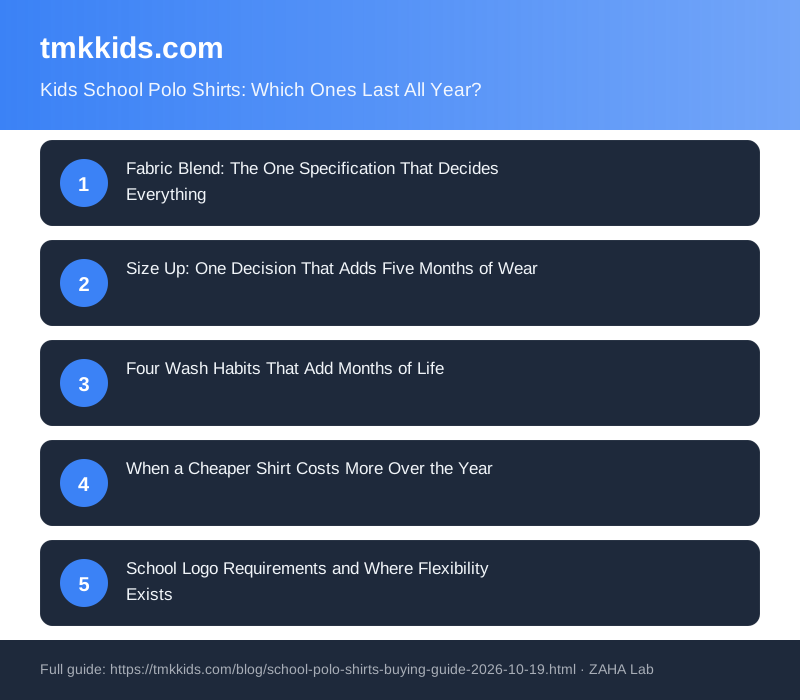
The average British parent buys 8.3 school polo shirts per child per year. That number should be closer to four.
Fabric Blend: The One Specification That Decides Everything
Two fibres dominate school polo shirts: cotton and polyester. Pure cotton feels soft and breathes well, but it pills after 15 to 20 machine washes and loses its collar shape noticeably by Christmas. A 65/35 polyester-cotton piqué blend holds its structure for 60-plus washes, resists shrinking, and dries in roughly half the time.
The trade-off with high-polyester blends is warmth. In a poorly ventilated classroom, a child who runs hot will feel the difference on a warm June afternoon. A 50/50 blend splits the difference: it sacrifices some durability but sits more comfortably on children who are sensitive to synthetic fabrics.
The weave matters separately from the fibre ratio. Piqué, the textured waffle-like surface on a standard polo, adds structural rigidity and hides light stains far better than a flat jersey knit. Any school polo labelled "piqué" in a 65/35 blend is a reliable starting point. The Fruit of the Loom Kids Piqué Polo Shirt uses this exact specification, reinforced with twin-needle seams at the stress points. A five-pack covering a full school week costs around £18.
Size Up: One Decision That Adds Five Months of Wear
Children between the ages of 5 and 11 grow an average of 6 cm between September and July. Buying the labelled age size in September produces a tight collar by Easter and an unwearable shirt by May.
Buying one size up costs nothing extra and adds five or six months of wearable life. The key check is collar circumference, not the age label. Most manufacturers publish collar measurements in centimetres on the product listing. A collar 2 cm larger than your child's current measurement is the sweet spot: noticeably comfortable without looking sloppy at the neck on day one.
Sleeve length follows shoulder width in most polo shirt cuts. If the shoulder seam sits correctly, the sleeves are almost always workable. Hem length is easy to tuck in and rarely matters for practical daily wear.
Four Wash Habits That Add Months of Life
Heat does more damage than anything else. Washing at 40°C rather than 60°C reduces fibre stress significantly. Polyester sets stains permanently above 50°C, so a ketchup mark washed at 60°C becomes a permanent fixture.
Turning shirts inside out before washing shields the visible outer surface from drum abrasion. It takes three seconds per shirt. Over 50 washes, the difference in pilling on the chest and collar is visible.
Fabric softener coats synthetic fibres and breaks down their moisture-wicking properties. Skip it on poly-cotton school shirts entirely.
Tumble drying on a low heat setting is fine for 65/35 blends. High heat weakens collar elasticity and shrinks cuffs progressively after around 20 cycles. Removing shirts while still slightly damp and allowing them to air-finish flat is the best approach for preserving collar shape long-term.
When a Cheaper Shirt Costs More Over the Year
Supermarket school polos priced at £2 to £2.50 each look like a bargain at first glance. Run the numbers differently. Families buying at the £2 tier average 8 to 9 shirts per child per year. Families buying at the £4 to £5 tier average 4 to 5 shirts. Total annual spend ends up nearly identical. The cheaper shirt requires more frequent replacement.
The one exception is children in Reception and Year 1. At those ages, growth is fast enough that durability becomes less relevant than fit. A cheaper shirt bought in the correct current size may genuinely be the better financial call for a four-year-old who will jump a full size by February.
School Logo Requirements and Where Flexibility Exists
Many primary schools require a logo-embroidered polo sold only through an approved supplier. In that case, fabric and price are fixed for you. But a growing number of schools allow plain polos in the correct colour alongside their branded version, particularly for nursery and Reception pupils.
Where flexibility exists, the Amazon Essentials Boys' Uniform Polo Shirt is a practical alternative to supermarket own-brands. It comes in white, navy, and pale blue, is cut slightly slimmer than standard supermarket options, and holds its colour through 30 washes without the greying or yellowing that cheaper shirts develop in the first term. A two-pack is priced at around £13.
One important check before ordering: if your school specifies a precise shade, compare the manufacturer's digital colour swatch against an existing branded shirt in natural daylight. "Royal blue" and "mid-blue" look identical on a screen and are visibly different side by side in a school corridor.
Stain Removal That Works on Poly-Cotton White Shirts
Speed matters more than product. Pre-treating a stain within 30 minutes of it happening removes most food and drink marks with nothing more than diluted washing-up liquid applied directly, left for ten minutes, then rinsed cold before the machine wash.
Grass and mud stains respond best to a biological pre-wash product applied dry to the dried stain, brushed off before washing. Applying it wet or to a wet stain reduces its effectiveness significantly.
For white shirts that have turned grey or yellow over a term, a 30-minute soak in sodium percarbonate dissolved in warm water (non-chlorine whitening agent, sold as oxygen bleach) restores brightness without damaging the poly-cotton fibres or embroidered logos the way chlorine bleach does. This works on 65/35 blends and is safe for most colour-fast embroidery thread.
Ballpoint ink responds to rubbing alcohol applied immediately to the fresh mark, before any water contact. Felt-tip and permanent marker are a different matter entirely. At that point, the shirt is best repurposed as a craft or gardening layer rather than sent back into the school uniform rotation.
Pack Sizes and the True Cost Per Wear
Buying individual shirts costs more per unit than buying a five-pack or twin-pack. A single mid-range polo at £5 works out to roughly 8p per wear over 60 washes. A five-pack of the same quality shirt at £18 (£3.60 each) drops that to 6p per wear. The pack-buying logic is sound for children in Year 2 and above, where annual growth is slower and a shirt bought in September is still wearable in July.
For families with two or three school-age children, buying packs in the same colour at different sizes once per year and rotating them as children grow is one of the more effective ways to reduce annual uniform spend without compromising on presentation.
Summary
Choose a 65/35 poly-cotton piqué polo. Buy one size up. Wash at 40°C, inside out, without fabric softener. That set of four decisions adds roughly two extra months of wearable life per shirt and cuts annual replacement costs by about half compared with buying the cheapest available option each time.
FAQ
What size should I buy for a school polo shirt?
Buy one size above your child's current labelled age size at the start of September. Check the collar circumference measurement on the product listing and aim for no more than 2 cm of extra space. This prevents a tight collar by spring without looking obviously large on the first day of term.
Are cotton or polyester polo shirts better for school?
A 65% polyester, 35% cotton blend outperforms pure cotton for durability. It resists pilling, holds its shape through 60-plus washes, and dries faster. Pure cotton is softer but typically needs replacing after 15 to 20 washes under regular school use.
How do I stop school polo shirts from going grey?
Wash at 40°C, not 60°C, and keep whites completely separated from any coloured items. A monthly 30-minute soak in sodium percarbonate solution (available as oxygen bleach or non-chlorine whitening powder) restores brightness without damaging the fabric.
Can I tumble dry school polo shirts?
Yes, on a low heat setting. High heat causes collar shrinkage and weakens cuff elastics progressively over 20 or more cycles. Removing shirts while still slightly damp and allowing them to air-finish flat gives the best long-term result for collar shape.
How many school polo shirts does a child actually need?
Five covers a full week without daily washing. Seven gives a buffer for stained or late-washed days. A five-pack bought at the start of each school year is the most cost-efficient approach for children in Year 2 and above, where the size is likely to fit from September through to at least April.