School Uniform Layering: What Actually Keeps Kids Warm
Most parents buy heavier jumpers for winter, then wonder why their child is still cold during the school day. The answer is not one thicker layer, but the right combination of three layers that work together and comply with school dress codes. This guide explains how to layer properly so your child stays warm without breaking uniform rules.
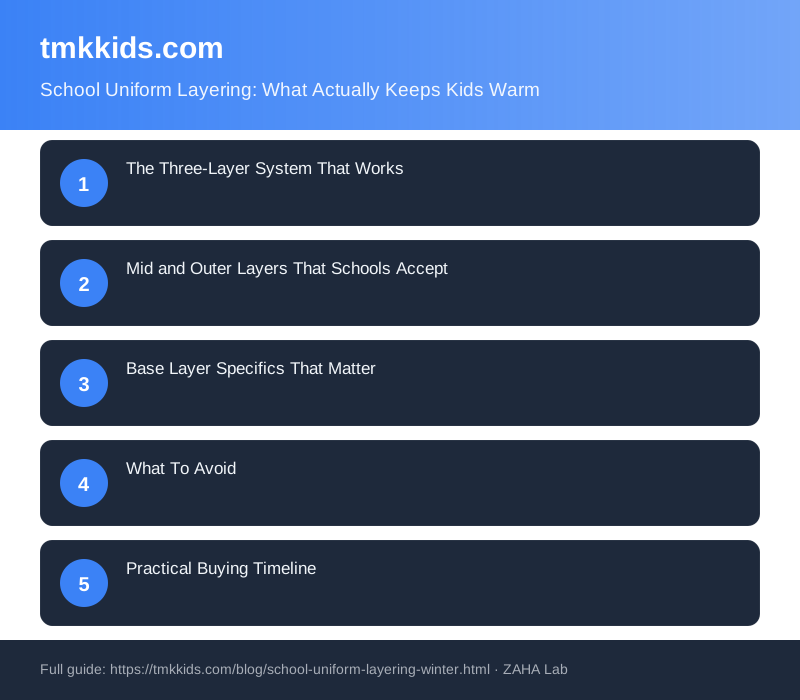
The Three-Layer System That Works
Professional athletes and outdoor workers use three-layer systems because they trap warmth efficiently. Your child's uniform layering should follow the same principle: base layer, mid layer, and outer layer.
The base layer sits against the skin and should be made from synthetic blends or merino wool, not cotton. Cotton absorbs moisture and makes kids colder when they sweat during play. Look for thermal base layer sets designed for kids, which typically cost £8 to £12 and last two years. Brands like LAPASA and Craghoppers make reliable options.
Mid and Outer Layers That Schools Accept
Most schools allow cardigans and jumpers as uniform additions. The mid layer should be a thin wool or wool-blend cardigan that fits under the blazer if required. School cardigans in merino blends provide warmth without bulk and cost £15 to £25. The outer layer is your child's standard uniform jumper, which you've likely already purchased.
This three-layer combination means your child can remove the cardigan indoors (where schools heat buildings to 21 degrees) and add it back during outdoor lessons. Single thick jumpers don't offer this flexibility.
Base Layer Specifics That Matter
Thermal base layers only work if you buy the right weight. "Lightweight" thermals work for autumn and spring. Winter mornings below 5 degrees Celsius need "mid-weight" thermals with a thickness around 180 to 200 grams. Don't buy "heavyweight" unless your child regularly walks to a cold school in isolated areas, as these cause overheating indoors.
Buy sizes that fit snugly but allow movement. Baggy thermals trap air in the wrong places. A size that fits your child's current measurements typically lasts one winter season before shrinking slightly.
What To Avoid
Cotton thermal wear defeats the purpose because it absorbs sweat. Avoid acrylic blends which pill after 10 washes. Super-thick layers (above 200 grams for base layers) overheat your child by midday, making them uncomfortable and more likely to catch colds when they shed layers outside.
Practical Buying Timeline
Buy base layers in August or early September before the rush. Cardigans in September. Most schools announce winter layering policies by October, so check uniform guidelines before investing heavily. Many schools now accept brands like Marks & Spencer school cardigans and layering pieces, which are durable and hold colour after 50+ washes.
FAQ
Do thermal base layers show through white school shirts?
No, if you choose the right base layer. Light grey or white thermal layers designed for kids remain invisible under white school wear. Avoid dark greys or blacks which show as shadows through thin cotton shirts.
How many base layer sets do I need?
Buy two sets so one can be washed while the other is worn. Thermals wash at 30 degrees on a gentle cycle and dry flat to prevent stretching. Two sets cost £16 to £24 total and last an entire winter.
Will layers make my child look bulky in the school photo?
No. Base layers are invisible. A single wool cardigan under a blazer adds minimal visible bulk and looks neater than a thick jumper worn alone. Most school photographers now expect layering in winter photos.
Can my child wear thermal leggings under uniform trousers?
Yes, if school policy allows. Most UK schools accept neutral-coloured thermal leggings under boys' trousers and girls' skirts. Check the uniform handbook or email the school office to confirm before buying.
What temperature range do these layers cover?
This system keeps children comfortable from around 3 to 12 degrees Celsius. Below 3 degrees, add a proper winter coat over the uniform. Above 12 degrees, revert to single-layer uniforms.
Affiliate Disclosure: This article contains affiliate links to Amazon UK. We receive a small commission if you purchase through these links at no extra cost to you. We only recommend products we have confidence will perform well for children's school wear.