Kids' Clothing Sizes: A Parent's Sizing Guide
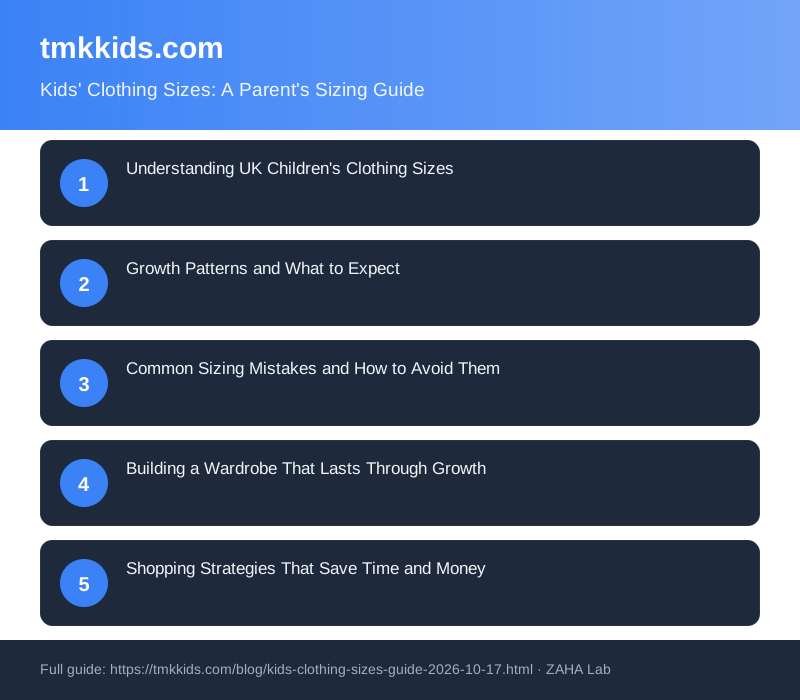
A child's size changes every 3 to 6 months, but most parents still buy clothes that fit now instead of planning ahead. Choosing the right size means fewer returns, less wasted money, and clothes that actually fit when your child wants to wear them. This guide explains UK sizing systems, how children grow, and practical strategies to get it right every time.
Understanding UK Children's Clothing Sizes
UK children's clothing is labelled by age range (newborn to 14 years) or by height and chest measurements in centimetres. Unlike adult sizes, which remain stable for years, children's sizes jump dramatically and unpredictably. A 4-year-old might comfortably wear 3-4 years, but an 8-year-old could fit anything from 7-8 to 9-10 depending on their individual growth pattern.
Most UK retailers follow similar sizing conventions, though small differences exist between brands. Always check the size chart before purchasing, especially online. A size 6-7 years in one brand might fit very differently from the same label in another. Chest width, total length, and sleeve reach all matter. Major retailers like M&S, Sainsbury's Tu Clothing, and Primark publish detailed size guides on their websites that you can reference before ordering.
Height and weight are better indicators of fit than age alone. If your child is taller or heavier than their age suggests, size up. Some children wear two different sizes at once, a smaller size in length to avoid dragging hems, and a larger size in width to avoid the shirt looking painted on. This is where layering basics and choosing items with adjustable waistbands becomes particularly useful.
Growth Patterns and What to Expect
Children grow fastest between ages 2 and 5, with growth rates slowing between 5 and 10, then accelerating again during puberty. Most children between 5 and 10 years old grow 5 to 8 centimetres per year and gain 2 to 3 kilograms annually. Knowing your own child's growth rate takes the guesswork out of shopping.
Start tracking your child's measurements at home. Every 2 to 3 months, measure their height (barefoot, pressed against a wall with a flat object on top of the head), chest circumference (across the fullest part), and inseam (from the crotch to the top of the ankle bone, inside leg). Keep a simple record in a notes app or a piece of paper in your purse. When you shop online, compare these actual measurements directly against the retailer's size chart. This approach is far more reliable than trusting the age label or guessing from photos.
Seasonal buying requires a little strategy. If your child is between two sizes in spring, buy the smaller size now and the larger size in July or August when new stock arrives. If they are stable in their current size, stock up on basics that won't go out of style quickly. Plain cotton t-shirt multipacks are especially good value for growing children because neutral styles remain wearable across multiple clothing sizes and seasons.
Common Sizing Mistakes and How to Avoid Them
The biggest mistake parents make is buying extra sizes to "allow room to grow." Adding 2 to 3 sizes sounds logical in theory, but oversized clothes look sloppy, feel uncomfortable, and children often refuse to wear them. A well-fitting shirt should reach your child's wrist when their arm hangs relaxed, and trousers should graze the top of the shoe without bunching at the ankle.
Use return policies to your advantage. Shop within 30-day return windows whenever possible. Most online retailers, including Amazon UK, Asos, and Boohoo, allow returns without questions or restocking fees. Many brands now offer free return posts. If a size is incorrect, send it back rather than trying to force your child into an ill-fitting garment. A week's delay is worth the certainty of proper fit.
Always ignore the size label and focus on the measurements instead. Two items both labelled "7-8 years" can fit completely differently depending on the brand and style. Some brands like Next and John Lewis maintain consistent sizing within their own ranges, making them reliable repeats. Comparing across different brands is much riskier. Spend one minute checking the detailed size chart before clicking buy. That small effort prevents returns and frustration.
Building a Wardrobe That Lasts Through Growth
Clothes that work across multiple sizes extend their useful lifespan. Adjustable waistbands on trousers and skirts are genuinely valuable, giving an extra 2 to 3 centimetres of growth room before replacement becomes necessary. Stretchy fabrics like cotton-elastane blends accommodate slight growth or weight changes. Layering pieces like cardigans and hoodies work over smaller or larger items without fitting issues.
Neutral colours and simple styles are far easier to hand down to younger siblings or pass to friends. A bright purple dinosaur jumper is delightful for one season, but a grey or navy crew-neck t-shirt works reliably for three years. Invest in basics: plain t-shirts in neutral colours, simple crew-neck or v-neck jumpers, and navy or black trousers in durable fabrics. Save budget for one or two seasonal statement pieces per child, rather than building an entire wardrobe from trendy items.
Quality matters more when children wear items hard and frequently. Look for reinforced seams, durable zips that don't stick or break, and fabrics that survive multiple washes without pilling or fading. Pure cotton, cotton-blend fabric, and merino wool all wear well. Polyester alone tends to bobble and degrade quickly. School uniform bundles often offer better value on hardy fabrics specifically designed to survive daily washing and playground wear.
Shopping Strategies That Save Time and Money
Order two sizes at the same time if you are uncertain. Keep the one that fits, return the other. Most retailers offer free returns and you avoid a second delivery delay. Many online shops allow you to add a note at checkout requesting that the next size up be sent if available, which some will accommodate.
Subscribe to brand emails for notification of sales and new size ranges. Back-to-school sales in August and end-of-season sales in January and July typically offer 20 to 40 per cent off. Plan larger purchases around these sales windows. If your child will need winter coats in November, buy in August when stock is fresh and better prices appear later in the month.
Use filter options on shopping sites to find flexible pieces faster. Search by "adjustable waist" or "stretch" to identify items that adapt to growth. Some retailers let you filter by size range, which is quicker than scrolling through hundreds of options. Read customer reviews, as parents often mention whether items run true to size or tend to be smaller or larger than expected.
When to Invest and When to Save
Buy quality on items that get worn every day and washed frequently: school uniforms, everyday jumpers, jeans, and shoes. These pieces see heavy use and multiple cycles through the washing machine. Mid-range brands like M&S and Next hold their shape, colour, and seam integrity better than budget supermarket brands and typically survive through two or three children.
Save money on fast-fashion trendy items that won't survive a hand-down. Graphic t-shirts with character prints, seasonal motifs, or dated patterns are worn out or outgrown within months, so low-cost options are perfectly fine. Supermarket brands like Sainsbury's Tu and George at Asda are entirely adequate for items your child will outgrow before they fall apart.
Special occasion wear is a one-time expense. Party dresses, formal shirts, and costume pieces don't need replacement until damage occurs. Buy the size your child needs right now, not a size up. If you have younger siblings, keep special-occasion items in a labelled storage box in the loft. They are easy to locate years later when the next child needs them.
FAQ
How much does the average child grow in one year?
Children aged 5 to 10 typically grow 5 to 8 centimetres and gain 2 to 3 kilograms annually. Younger children between 2 and 5 grow faster, while teenagers' growth slows significantly. Growth is highly individual, so tracking your own child's pattern is more useful than relying on age-based averages.
Should you buy kids' clothes that fit now or choose a larger size for growth room?
Buy clothes that fit now. Oversized items look untidy and children often refuse to wear them. Plan ahead by purchasing the next size for future seasons, not by buying oversized items today. A 2-centimetre comfort gap is acceptable; anything larger is wasted money.
Which UK brands offer the most reliable sizing?
M&S, Next, John Lewis, and Tu by Sainsbury's maintain consistent sizing within their own ranges and are reliable repeats. Supermarket brands vary slightly but are generally true to size. Licensed character brands and designer brands often run smaller, so always check reviews and detailed size charts.
How do you know if clothes ordered online will actually fit before your child tries them on?
Measure your child's height, chest, and inseam, then compare these measurements directly to the retailer's size chart. This is far more accurate than trusting the age label or looking at photos. UK retailers typically provide measurements in centimetres. Five minutes spent measuring eliminates most returns.
Should school uniforms be purchased a size or two larger?
Buy the correct size for now. Most school uniforms need replacement annually anyway due to wear, not just growth. Purchase near the start of the school year so your child has a full academic year of wear. Many schools and retailers offer significant discounts during August, so time your purchase for then.